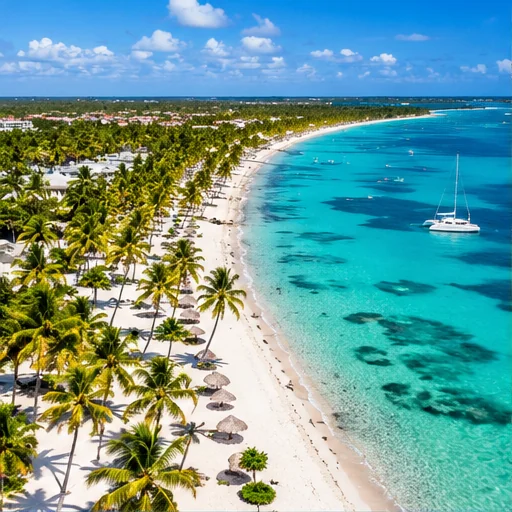
Choosing where to stay is the single decision that shapes the rest of a Dominican Republic trip. A beautiful room can be the wrong booking if the surrounding area does not match the experience you want. The country offers large all-inclusive resort zones, lively coastal towns, historic urban neighborhoods, quieter peninsulas and mountain communities. Each offers a different balance of convenience, independence, beach access, dining and transport.
This guide compares regions first, then accommodation styles, so you can make a decision based on how you actually plan to spend your days.
The quick comparison
Punta Cana and Bávaro: best suited to travelers seeking broad resort choice, straightforward airport transfers and organized excursions. Convenience is the main advantage; distances between resorts and towns can make independent exploration less spontaneous.
Bayahíbe and Dominicus: a coastal alternative for travelers interested in a smaller base, calm-water opportunities when conditions permit, and excursions toward Saona Island. Confirm the precise beach access of each property.
Las Terrenas: appealing to independent travelers who want beaches, restaurants and a town atmosphere. The exact neighborhood matters: some accommodations are walkable to dining while others require transport.
Puerto Plata, Sosúa and Cabarete: three distinct north-coast experiences. Puerto Plata has urban history and services, Sosúa has established beaches and tourist infrastructure, and Cabarete is known for wind- and water-sport culture. Do not treat them as interchangeable.
Santo Domingo: ideal for history, culture, restaurants and city stays, particularly around the Colonial City and other well-connected districts. It is not a substitute for a beachfront resort vacation.
Samaná and Las Galeras: attractive for travelers seeking nature and a slower coastal rhythm, with more planning required for transfers and certain excursions.
Jarabacoa and Constanza: mountain bases for cooler conditions, scenery and outdoor experiences. Prioritize access roads and transport over beach amenities.
Punta Cana: understand the resort geography
Punta Cana is often used as a broad label for a large tourism region. Properties may be spread across different beach sectors and resort complexes. Before booking, look at the actual map pin, the beach in front of the property and the distance to restaurants or shops outside the resort. A hotel described as “Punta Cana” is not necessarily within an easy walk of a town center.
An all-inclusive resort can offer excellent value if you expect to use the restaurants, pools, activities and beach facilities most days. It may offer less value if you intend to spend every morning exploring and every evening dining elsewhere. Compare room categories carefully: a low entry price may not include the view, location or amenities shown in promotional photos.
Bayahíbe and Dominicus: coastal simplicity
Bayahíbe has a village setting, while Dominicus is associated with a concentration of beach accommodations and resort options. Travelers often choose this region for its coastline and access to boat excursions. The experience differs depending on whether you stay in the village, an apartment area or a resort compound.
If you plan to visit Saona Island, check the operator's departure location, included transfers and weather cancellation policy. Staying near an excursion departure point does not guarantee the best overall location for dining or swimming. Review recent comments on beach conditions and access.
Las Terrenas: walkability makes a difference
Las Terrenas can work particularly well for travelers who want to eat in independent restaurants, visit multiple beaches and experience a more self-directed holiday. However, “Las Terrenas” covers different beach stretches and residential areas. A rental advertised as close to town may still be inconvenient on foot in heat or rain.
Before booking, measure the walking route to your preferred beach, grocery store and evening dining options. If you plan to explore several beaches, budget for taxis or a vehicle. For apartments, confirm electricity charges, air conditioning, water supply arrangements and check-in procedures.
Puerto Plata, Sosúa and Cabarete: three bases, three moods
Puerto Plata is useful for visitors who want city services, historical sights and access to north-coast attractions. A stay in the city can be rewarding for cultural travel, but not every property is beachfront.
Sosúa offers established tourism services and beach access in particular areas. The atmosphere changes from one neighborhood to another, so read location-specific reviews and consider whether the surroundings suit a family, couple or solo traveler.
Cabarete is a stronger fit for travelers interested in beach sports, casual dining and a more active atmosphere. Wind and sea conditions are part of its appeal, but not every beach day is ideal for relaxed swimming. Families seeking calm water should evaluate specific beach conditions rather than choosing solely on the destination's popularity.
Santo Domingo: pick a neighborhood deliberately
For a culture-first visit, the Colonial City offers proximity to historical streets, museums and restaurants. The appeal is walkability and atmosphere, although traffic, noise and building conditions vary. Confirm whether the property has reliable air conditioning, accessible entry and appropriate security arrangements.
Other urban districts may offer modern hotels and business amenities but require taxis to reach historic attractions. Compare the total daily cost of transport rather than booking only by nightly price. If you will drive, check parking availability before arrival.
Samaná Peninsula: nature rewards extra planning
Samaná, Las Galeras and Las Terrenas offer different bases across the peninsula. A property with a spectacular ocean view may be far from restaurants or accessible only by a steep road. Confirm transfer times and whether you need a car. For excursions, ask about departure docks, pickup options and seasonal suitability.
A secluded stay can be memorable for couples and nature-focused travelers. It is less practical if you want nightlife, frequent dining out or easy last-minute transport. Match the location to your daily rhythm rather than to a single photograph.
Mountains: Jarabacoa and Constanza
Mountain lodges and cabins can offer a very different Dominican experience, with valley views, rivers and cooler evenings. Before choosing a remote cabin, confirm the access road, parking, hot-water reliability and what groceries or restaurants are nearby. Some excursions are best arranged with experienced local guides.
A mountain property can be ideal for a two- or three-night break, but it should not be booked under the assumption that it provides the same services as a coastal resort. Check whether heating or extra bedding is appropriate for your travel dates and elevation.
Accommodation types explained
All-inclusive resort: convenient meals and facilities; compare restaurant reservation rules, included drinks, beach access and the cost of upgrades. Check whether the property suits your preferred atmosphere—quiet, family-oriented or lively.
Boutique hotel: often more individual in design and service; may have fewer facilities or limited reception hours. Verify breakfast, parking, pool access and late check-in policies.
Apartment or vacation rental: useful for families and longer stays; check cleaning fees, electricity, kitchen equipment, security and cancellation rules. A low nightly price may become less attractive after extra charges.
Guesthouse or small inn: can offer personal service and local insight; confirm room facilities and transport options, particularly in smaller towns.
Eco-lodge or rural cabin: excellent for scenery and nature; check road access, insects, weather exposure, emergency contacts and the practical distance to food and medical services.
What a trustworthy listing should tell you
A reliable listing provides an accurate location, clear cancellation terms, a complete description of what is included, and recent guest feedback. Look for patterns rather than isolated complaints. Several recent reviews mentioning weak air conditioning or inconsistent water pressure are more useful than a single enthusiastic score.
Compare photos of the actual room category you will book, not just the property's most expensive suite. If accessibility matters, ask about steps, elevators, bathroom layout and beach pathways. If working remotely, request realistic internet information and a backup plan for interruptions.
Total-trip cost beats the cheapest nightly rate
Consider two hypothetical stays. One costs less per night but requires daily taxis and restaurant transport; the other costs more but is walkable to the beach and dining. Once you add transport, time and convenience, the second may be the better value. The same applies to all-inclusive packages versus independent stays: the right choice depends on how many meals and activities you actually use.
Create a simple comparison with accommodation, taxes and fees, airport transfers, local transport, meals, excursions and cancellation flexibility. Do not assume that an advertised discount automatically means the lowest total price.
Match the base to the length of your trip
For three to five nights, one base is usually best. A short holiday can disappear into transfers if you move every two days.
For seven nights, one region remains a strong option. Two bases can work when the transfer is sensible and the experiences are genuinely different.
For ten to fourteen nights, a city-and-coast or coast-and-mountains combination can provide variety without turning the holiday into constant packing.
Booking checklist
- Verify the exact property location and realistic airport transfer.
- Compare the actual room category and what is included.
- Read recent reviews for recurring practical issues.
- Confirm access to beaches, restaurants and groceries.
- Check cancellation, taxes, cleaning and electricity charges.
- Consider mobility, children and luggage needs.
- Budget for local transport and excursions.
- Save the address and arrival instructions offline.
Frequently asked questions
Which region is easiest for a first visit?
Punta Cana–Bávaro is often straightforward for a resort-centered holiday because of its accommodation range and transfer infrastructure. The best region still depends on whether you want culture, independent dining or nature.
Is an all-inclusive always cheaper?
No. It can be good value when you use the included meals and facilities. Independent stays can be better for travelers who prefer local restaurants and spend much of the day away from the property.
Should I book a beach hotel without a car?
Yes, if the location fits your plans. Confirm walkability and transfer options. A remote beachfront rental may require more transport than a centrally located hotel a short walk from the beach.
Is it better to change hotels to see more of the country?
Only when the new base adds enough value to justify travel time. For short stays, well-chosen day trips may be more relaxing than frequent hotel changes.
Final decision
Choose the region first, the neighborhood second, and the property third. When all three fit your travel style, the Dominican Republic becomes easier to explore and far more enjoyable than a trip planned around the cheapest attractive room photograph.
Official sources
Rules, permits and entry requirements may change. Check official sources before traveling.