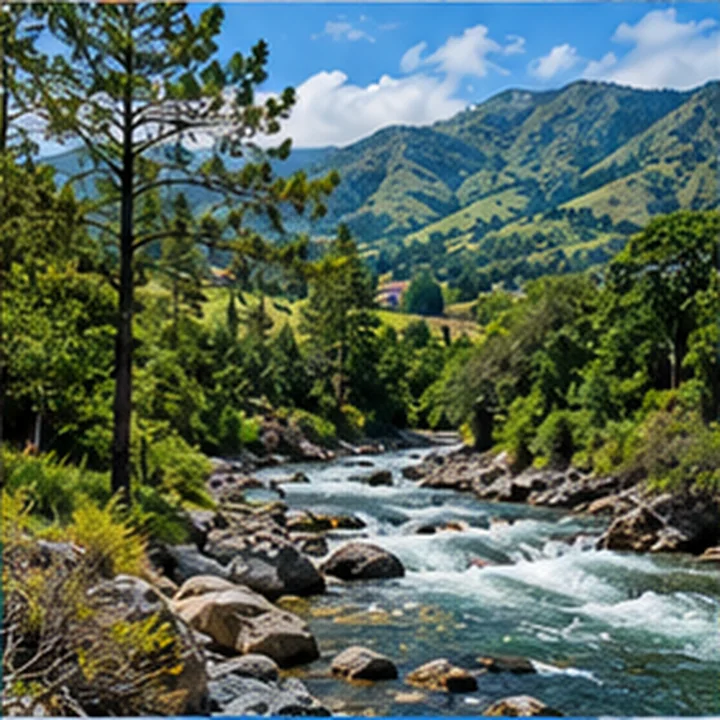
Best for: hikers, nature-focused couples, families seeking cooler highland air, and travelers who want rivers, mountain scenery and outdoor activities instead of a beach-resort holiday. Not ideal for: visitors who expect a tropical beach, effortless public transport to every attraction or guaranteed dry hiking conditions.
The mountain setting changes the trip
Jarabacoa lies in the Dominican Republic's central highlands, in La Vega province. Its appeal is fundamentally different from the country's coastal resorts: pine-covered hills, rivers, agricultural landscapes, mountain views and a climate that can feel noticeably cooler, especially in the evening and at higher elevations. Pack for changing temperatures and rain rather than assuming that everything in the Dominican Republic requires only beachwear.
The town is a useful service center, but many of the cabins, villas, waterfalls and activity operators marketed as “Jarabacoa” are spread across surrounding valleys and hills. A property with a dramatic mountain view may be reached by a steep or rough road. Before booking, ask whether ordinary cars can reach it, whether the access road is paved, and how long it takes to get to groceries, restaurants and your planned activities.
Choosing where to stay
A town-based hotel or guesthouse is practical if you want straightforward access to restaurants, stores and transport. It may not deliver the secluded mountain atmosphere shown in destination photographs, but it can reduce the daily logistics of an independent trip. Check noise, parking, air conditioning or heating needs and whether hot water is reliably available.
A cabin or villa outside town is often the reason people choose Jarabacoa. The trade-offs are transport, weather and services. Ask about road access after heavy rain, backup power, Wi-Fi reliability, heating or blankets, and whether the property has a staffed reception. If booking a hillside property with children, confirm railings, stairs and pool safety. A scenic balcony does not compensate for an unsafe approach road or an unexpected hour-long drive to dinner.
Travelers planning remote work should verify actual connection speeds rather than trusting a generic “Wi-Fi included” label. If your itinerary includes early departures for hiking, prioritize a location that does not require a long mountain drive before dawn.
Waterfalls, rivers and outdoor activity
Salto de Jimenoa and Salto de Baiguate are among the area's known waterfall attractions. Access arrangements, trail condition and permitted viewing areas can change, particularly after rainfall. Some routes include uneven paths, stairs or suspension bridges. Confirm the current official or local access situation before departure and do not assume that every waterfall is suitable for swimming. River levels can rise quickly; never enter water when local guides advise against it.
Rafting on the Yaque del Norte is another activity associated with the region. This is a guided adventure, not a casual float. Ask the operator about age restrictions, swimming ability, safety equipment, guide qualifications, weather cancellations and whether transport is included. Even when an activity is commercially offered, the appropriate level of risk depends on water conditions and your group's abilities.
Horseback riding, mountain biking and guided walks may also be available. Choose operators who explain the route and provide appropriate equipment. Avoid itineraries that combine several strenuous activities without time to recover, especially if you have just arrived from a hotter, lower-elevation area.
Pico Duarte: plan it as a separate expedition
Jarabacoa is one of the gateways associated with routes into the Cordillera Central and expeditions toward Pico Duarte, the country's highest peak. A Pico Duarte trek is not a spontaneous half-day excursion. Routes generally require significant hiking time, planning, appropriate gear and attention to protected-area rules. Conditions can be cold, wet and physically demanding, especially overnight. Verify current permit requirements, access routes, guide arrangements and park regulations with the responsible authorities or established local operators.
If you have only two or three nights in Jarabacoa, choose shorter local hikes rather than forcing a major summit itinerary into an unsuitable schedule. A traveler who enjoys casual walks may love the region without needing to attempt its most demanding mountain objective.
What to eat in the highlands
The highland setting invites a different dining rhythm from an all-inclusive beach resort. Look for Dominican home-style cooking, soups, stews, rice dishes, plantains, grilled meats and locally grown produce. Agricultural areas in the central region contribute to the food culture, but specific restaurant menus and supply change. Ask what is freshly prepared rather than relying on a years-old online list.
Breakfast can be an especially enjoyable part of a cabin stay: coffee, eggs, fruit and a substantial Dominican-style meal before a hike. For excursions, carry enough drinking water and snacks, particularly if your route does not pass through villages or shops. Do not assume that a scenic waterfall area has reliable food vendors or card payments.
If you are self-catering, buy groceries before heading to a remote cabin and ask about kitchen equipment. A property advertised with a barbecue may not include fuel or utensils. Confirm these details before arrival rather than discovering the gaps at night.
Getting there and driving safely
Many visitors reach Jarabacoa by road from Santiago, Santo Domingo or other parts of the country. Journey times vary with traffic, weather and road conditions. The final approach to an outlying cabin may be slower than the highway portion. If renting a car, ask your accommodation whether high clearance is advisable and avoid assuming that a vehicle suitable for city driving can handle every mountain track.
Mountain roads require extra caution in heavy rain, fog and darkness. Plan arrival in daylight when possible, especially on a first visit. If you prefer not to drive, organize transfers and guided activities in advance; a remote villa without transport can leave you dependent on expensive last-minute arrangements.
How to plan two, four or six days
Two days: arrive during daylight, enjoy the town or cabin setting, and choose one accessible waterfall or short guided walk. Leave enough time to relax rather than racing between distant viewpoints.
Four days: add a guided rafting or horseback outing if suitable, a slower day exploring local food and scenery, and a second nature experience with flexibility for weather. This is a comfortable first introduction to the highlands.
Six days: consider splitting time between Jarabacoa and another central-highlands destination such as Constanza, or using the extra days for more ambitious guided hiking. Do not confuse extra time with permission to ignore trail conditions; weather can still dictate the schedule.
A mountain-trip packing and booking checklist
Bring a light warm layer, rain protection, sturdy shoes with grip, sun protection and insect repellent. For rafting or waterfall visits, confirm the operator's footwear requirements. Pack essential medications and a basic first-aid kit, and share your route with someone if hiking. Check the property access road, hot water, cancellation terms and the availability of transport. Verify current conditions before committing to an exposed trail or river activity.
Editorial note: Attraction access, safety rules, river levels and permit requirements must be verified near travel dates. This guide deliberately does not invent current prices or operator availability.
Official sources
Rules, permits and entry requirements may change. Check official sources before traveling.