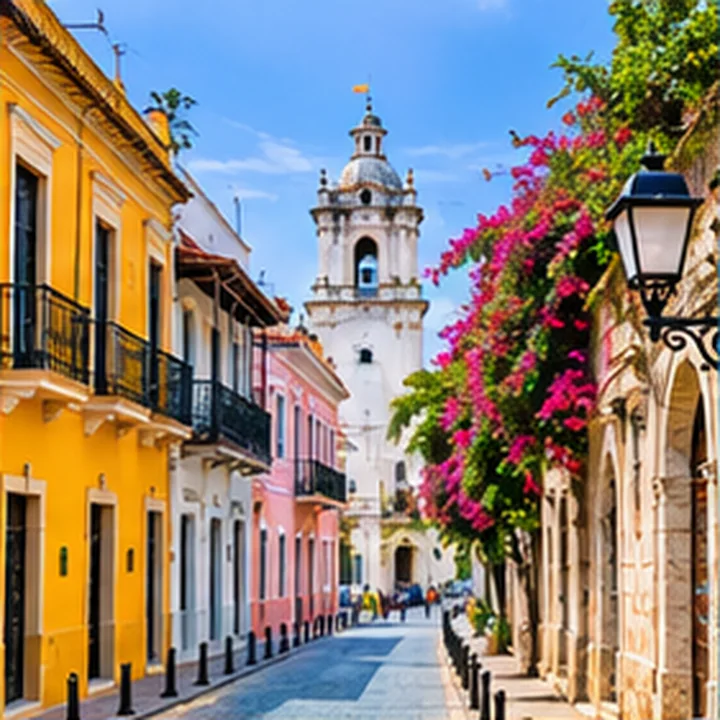
Best for: history, architecture, restaurants, contemporary Dominican culture and visitors who prefer exploring neighborhoods to spending an entire trip inside a resort. Planning reality: Santo Domingo is a large, busy capital; where you sleep and how you move around shape the experience as much as the attractions themselves.
Why Santo Domingo deserves its own stay
Santo Domingo offers something that resort destinations cannot replicate: an encounter with the Dominican Republic as a living city. The Ciudad Colonial has landmark buildings, plazas, museums, cafés and layers of history, while neighborhoods farther west show the commercial and culinary energy of the modern capital. A rushed excursion can show you famous façades; an overnight stay gives you time to explore early, return after sunset and understand how different parts of the city connect.
The colonial district is associated with the earliest period of European settlement in the Americas, but responsible interpretation also includes the experiences of Indigenous people, enslaved Africans and later Dominican communities. Treat historic labels critically: the city’s significance is real, yet individual “first in the Americas” claims can depend on definitions and should be checked against museum or heritage sources. The UNESCO-listed Colonial City is an excellent starting point for that deeper history.
Where to stay: three different experiences
Ciudad Colonial is usually the most convenient base for a first cultural visit. Many sights can be explored on foot, and it is easier to return to your hotel between museum visits and dinner. The trade-offs can include nightlife noise, limited parking and buildings whose historic layouts are not always ideal for travelers needing elevators or step-free access. Read reviews for the exact street and room, not just the district.
Gazcue offers a more residential, central-city atmosphere with access to major avenues and cultural sites. Its appeal depends on the specific property and your transport plans; do not assume that all blocks are equally walkable. Piantini and nearby business districts suit travelers who value modern hotels, shopping and restaurants, but sightseeing in the colonial center will usually require a vehicle. The right choice depends on whether your trip revolves around heritage or contemporary city life.
Verified heritage context (UNESCO). The Colonial City of Santo Domingo was inscribed on the UNESCO World Heritage List in 1990. UNESCO describes its early grid-plan urban fabric and important colonial institutions, while noting that the settlement developed across the Ozama River in stages: an initial establishment on the eastern bank in 1496, foundation in 1498 and relocation of institutions to the western bank in 1502. These distinctions matter: do not reduce the city's complex history to a single unqualified claim that everything began in one year. The UNESCO designation concerns the historic district, not every neighborhood in the modern capital. Source: https://whc.unesco.org/en/list/526/ .
What UNESCO status actually covers
UNESCO lists the Colonial City of Santo Domingo, inscribed in 1990, as a World Heritage property. This does not mean the entire present-day city is inscribed or that every old-looking building has the same heritage status. The UNESCO record also notes a minor boundary modification approved in 2024; visitors planning heritage-focused walking routes should rely on the actual protected-area map rather than a vague marketing description of “old Santo Domingo.” Official listing: https://whc.unesco.org/en/list/526/ ; documentation: https://whc.unesco.org/en/list/526/documents/ .
For a meaningful visit, distinguish the physical heritage from the stories told about it. The historic district reflects Spanish colonial institutions, but its interpretation should also address Indigenous communities, enslaved Africans and later Dominican society. A guided walk or museum visit can supply context that a quick photograph cannot. Check museum opening times separately: UNESCO status is a heritage designation, not a guarantee that every monument is accessible every day.
A thoughtful walk through the Colonial City
Begin early to enjoy cooler temperatures and quieter streets. Build a route around Parque Colón and the cathedral area, then explore Calle Las Damas and nearby heritage buildings at an unhurried pace. The Alcázar de Colón and Fortaleza Ozama are commonly included in historic itineraries; check current opening arrangements and ticketing before visiting. Museum exhibits can provide context that walking past monuments alone cannot. Wear comfortable shoes: surfaces may be uneven, and shade is not continuous.
Rather than rushing from one photo stop to another, pause to notice how churches, houses, public spaces and commercial streets have changed over centuries. A knowledgeable licensed guide can add context, especially when you want a more balanced discussion of colonialism, independence and Dominican identity. If visiting with children, alternate museums with plazas, short walks and refreshments rather than scheduling a full day of indoor exhibits.
The city beyond the old walls
The Malecón is a major coastal avenue and a useful way to experience the city's waterfront atmosphere, but it is not a classic swimming-beach destination. Allow time for modern art, music or a cultural event if one coincides with your dates. Contemporary neighborhoods are spread out, so choose one or two areas to explore rather than trying to sample the whole city in a single afternoon. The Botanical Garden and other green spaces can offer a different rhythm, though travel time and opening arrangements should be confirmed.
A common planning mistake is assuming that the capital is compact because the Colonial City is walkable. Santo Domingo's traffic can be slow and unpredictable. A dinner reservation across town may require a substantial transfer even if the map distance looks modest.
Dominican food: what to seek out
Santo Domingo is an excellent place to explore Dominican cooking beyond resort buffets. Look for mangú with traditional breakfast accompaniments, la bandera dominicana at lunch, sancocho when available, pastelón, tostones and regional seafood preparations. The pleasure is not in ticking off every dish but in seeing how everyday meals, family recipes and modern interpretations coexist.
Choose restaurants by neighborhood and the kind of evening you want. A casual lunch spot near your sightseeing route may be more rewarding than a famous restaurant requiring an hour in traffic. For dinner, compare menus, reservation policies, recent reviews and return transport. Dietary needs should be confirmed directly, including possible cross-contact. Street-food experiences can be enjoyable, but pay attention to food handling and choose vendors with good turnover.
Arriving and getting around
Las Américas International Airport (SDQ) serves the capital. The transfer to your accommodation depends on traffic, arrival time and destination neighborhood. Prearrange an airport pickup if you want a predictable arrival, particularly late at night. Within the city, reputable taxis and app-based rides may be practical for many visitors; confirm the vehicle and pickup location. The Santo Domingo Metro is useful on certain corridors, but it does not replace door-to-door transport for every tourist attraction.
If you plan to rent a car, consider whether parking and urban driving will genuinely improve your trip. For a stay focused on Ciudad Colonial, walking plus occasional rides can be simpler. Keep extra time for airport transfers and intercity journeys, especially during commuter peaks.
A three-day itinerary with breathing room
Day 1 — Colonial City. Check in, explore the central plazas and historic streets, visit one major museum and enjoy dinner nearby. Day 2 — Deeper culture. Add a guided heritage walk, another museum or cultural institution, then spend the evening exploring Dominican food or live music in a suitable venue. Day 3 — Contemporary Santo Domingo. Visit a modern neighborhood, garden or cultural attraction before departure. If you have only one day, concentrate on the Colonial City and skip the temptation to cross the city repeatedly.
Travelers combining Santo Domingo with Punta Cana or Bayahíbe should allow enough time for an intercity transfer and avoid scheduling a full day of sightseeing immediately before a flight. A capital-and-beach itinerary works best when each stop has a clear purpose.
Costs, safety and practical details
Budget for accommodation, museum admissions, transport, meals and occasional guided experiences. Historic hotels can be atmospheric, but check noise, stairs and air conditioning. In crowded areas, protect phones and wallets and use normal big-city judgment after dark. Do not assume that every street is suitable for walking at every hour. Sun exposure and heat can be significant even when your day is mostly urban.
The city is a place where respectful curiosity matters. Ask permission before photographing people, especially workers and children. Learn a few basic Spanish phrases; English availability varies outside tourism-oriented establishments. Support local guides and businesses that offer transparent prices and meaningful cultural interpretation.
Booking checklist and official references
Confirm your hotel’s exact neighborhood, access to the sights you care about, airport transfer arrangements, current museum hours, parking or accessibility needs, and whether your dinner plans require advance reservations. Check immigration requirements on official government sites rather than paying unofficial e-ticket intermediaries.
Official references: Dominican Ministry of Tourism — https://mitur.gob.do/ ; Directorate General of Migration — https://migracion.gob.do/ ; official e-ticket — https://eticket.migracion.gob.do/ ; UNESCO World Heritage Centre — https://whc.unesco.org/ .
Official sources
Rules, permits and entry requirements may change. Check official sources before traveling.