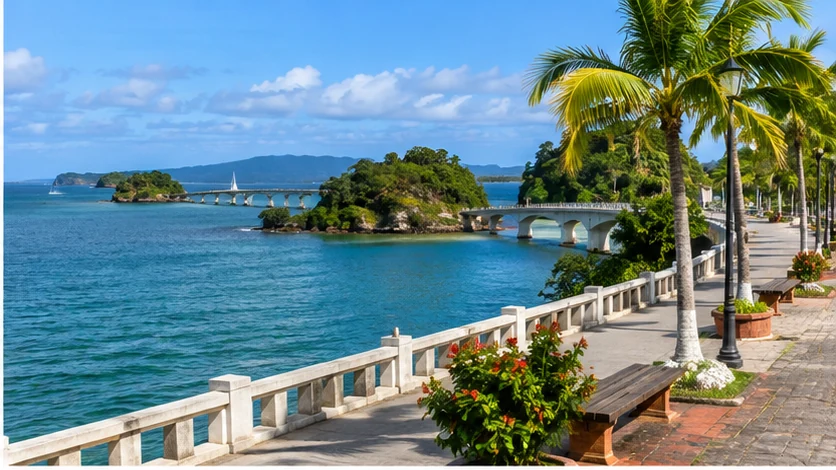
Best for: travelers drawn to lush landscapes, smaller coastal communities, independent accommodation and days that revolve around nature rather than large resort entertainment programs. Key planning principle: Samaná is a peninsula, not a single compact resort town; Las Terrenas, Las Galeras and Santa Bárbara de Samaná serve different kinds of trips.
Get the geography right first
The Samaná Peninsula occupies the northeastern part of the Dominican Republic. Its combination of green hills, coves, beaches and coastal settlements is a major part of its appeal. But winding roads and the distances between communities mean that staying in one place does not give effortless access to everything. Choose your base around the experiences you most want, then decide which outings justify a longer journey.
Las Terrenas is often the easiest choice for travelers who want a broad mix of beaches, restaurants and independent lodging. Las Galeras offers a quieter village atmosphere and access to striking coves, some reached by boat or on foot. Santa Bárbara de Samaná, the peninsula’s principal town, is a practical base for certain excursions and a chance to experience a different rhythm from beach-focused resort areas. These are not interchangeable neighborhoods; changing base mid-trip may be worthwhile if you have enough days.
Which beach experience are you seeking?
Samaná’s coastline is varied. Playa Bonita and other beaches near Las Terrenas can appeal to visitors who want a mix of scenery and nearby services. Playa Rincón, near Las Galeras, is celebrated for its broad natural setting, but access logistics and sea conditions should be checked before setting out. Some coves are reached on organized boat trips, where departure decisions depend on the weather. Do not treat a beach photo as a promise of safe swimming or easy access.
On exposed shores, waves and currents may change quickly. Check conditions locally, follow warnings and avoid swimming alone in unfamiliar water. Some beaches have limited facilities, shade or reliable mobile coverage; bring drinking water, sun protection and a way to return. If traveling with children or anyone who needs accessible paths, ask about the final stretch of access rather than relying on the phrase “easy excursion.”
Whale watching: seasonal and wildlife-first
Samaná Bay is known for seasonal humpback-whale activity, generally associated with the winter breeding season. The exact operating dates, sighting probabilities, permitted areas and sea conditions require current confirmation from authorized operators and responsible authorities. Whale watching is a wildlife experience, not a guaranteed show. Choose operators who respect distance rules, limit disturbance and explain what happens if conditions prevent departure.
If whale watching is the main reason for your trip, build in schedule flexibility rather than planning only one possible morning. A responsible operator may cancel or modify a tour when conditions are unsafe. That is a sign of professionalism, not poor service. Visitors prone to seasickness should ask about boat type and expected exposure, and consider whether a marine excursion is suitable for them.
Verified whale-season planning. The International Whaling Commission's Dominican Republic country profile identifies January through March as the principal period for humpback-whale watching in Samaná Bay. This is a seasonal pattern, not a guarantee of sightings or an assurance that a particular operator will sail on a given date. The Commission also distinguishes accessible day trips in the bay from longer, more specialized offshore expeditions to Silver and Navidad Banks. For a family or a first-time visitor, compare the actual departure port, boat size, expected sea exposure, operator authorization and weather cancellation policy before paying. Source: https://wwhandbook.iwc.int/en/country-profiles/dominican-republic .
Considering a Los Haitises day trip from Samaná
Los Haitises is a protected landscape of mangroves, limestone hills, caves and bird habitat in the northeastern Dominican Republic. The Ministry of Environment lists boat excursions, mangrove observation, birdwatching and visits to caves with rock art among the park’s activities. These are possibilities within a protected area—not a promise that every cave or route is open on your travel dates. Source: https://ambiente.gob.do/parque-nacional-los-haitises/ .
Important access alert (reviewed 16 November 2026). The Ministry announced the temporary closure of Cueva de La Línea on 23 June 2026 because of damage to the visitor access dock. It said other authorized public-use areas would remain operational, and that any reopening would be announced through official channels. Do not purchase an itinerary specifically advertising this cave without confirming the latest official status. Source: https://ambiente.gob.do/medio-ambiente-dispone-cierre-temporal-cueva-la-linea-los-haitises/ .
A Samaná-based traveler should ask a tour provider exactly where the boat departs, whether road transfers are included, which caves are actually on the itinerary, what happens if weather prevents departure and whether park access fees are included. A low advertised tour price can conceal a long transfer or a substantially different route. Choose a licensed or otherwise properly authorized provider, avoid touching cave art or formations, and respect wildlife-distancing instructions.
Waterfalls, forest and inland excursions
El Limón waterfall is among the peninsula’s best-known inland outings. Access involves a journey into a tropical landscape, and the exact route, walking conditions and available transport options vary by operator and weather. Wear shoes appropriate for slippery ground, ask about physical demands before booking and avoid assuming that an excursion is effortless because the promotional photograph shows a calm pool. Heavy rain can affect trails and water conditions.
The peninsula also offers opportunities for birdwatching, nature walks and scenic drives. Choose experiences that fit your fitness level and available time. A half-day nature outing can be more satisfying than combining several distant attractions into a rushed itinerary. Responsible guides should explain local ecosystems, protect wildlife and avoid pressuring visitors into activities they are uncomfortable with.
Staying in Las Terrenas, Las Galeras or Samaná town
For Las Terrenas, decide whether evening walkability matters more than staying directly on a quiet beach. Some attractive rentals are set back from the shore or along roads that make a vehicle useful. In Las Galeras, smaller properties and guesthouses can create a relaxed stay, but dining choice, cash access and transport may be more limited. In Samaná town, assess proximity to your departure point for excursions and the kind of evening atmosphere you want.
Compare accommodation on total practicality: air conditioning, backup power arrangements, road access, parking, kitchen facilities and the reliability of the internet if you need to work. Ask whether the advertised beach is swimmable and how long it takes to reach it on foot. A low nightly rate can lose its advantage if every meal or outing requires an expensive transfer.
Food and everyday life
Seafood is a natural part of many coastal menus, but freshness, preparation and prices differ by establishment. Look for regional Dominican cooking, fish dishes, plantains, rice, beans and seasonal produce. Samaná also has culinary traditions influenced by its distinct history; a knowledgeable local guide or cook can explain these better than a generic resort menu. Rather than claiming one restaurant is universally “the best,” compare location, opening hours, recent feedback and the style of meal you want.
Smaller communities may close earlier than visitors expect, and card acceptance can be inconsistent. Carry a reasonable amount of local currency while keeping valuables secure. If you have dietary restrictions, communicate them clearly and confirm ingredients directly with the kitchen.
Getting there and moving around
El Catey International Airport (AZS) is geographically relevant to the peninsula, but flight availability depends on route and season; do not assume a direct flight exists from your departure city. Some travelers arrive through Santo Domingo or another airport and continue by road. Compare the complete journey, including transfer time and cost, before selecting a flight purely on airfare.
A rental car can make it easier to explore multiple beaches and towns, but roads may be winding and driving conditions unfamiliar. Private transfers reduce logistical demands but cost more. If you will rely on local taxis or arranged drivers, agree on the fare and return pickup in advance. Avoid scheduling a late-night arrival at a remote rental without confirming check-in and directions.
A six-day itinerary that respects distances
Day 1 — Arrive and settle in. Keep plans light and confirm local transport. Day 2 — Your nearest beach. Learn the area before booking long excursions. Day 3 — Nature outing. Visit El Limón or choose a guided walk suitable for your group. Day 4 — Coastal exploration. Spend time at another beach, allowing for road or boat conditions. Day 5 — Seasonal marine experience or cultural day. If visiting during the whale season, consider a responsible whale-watching trip; otherwise explore a town, market or local food experience. Day 6 — Departure. Build a generous buffer for the road transfer.
With eight or nine days, consider splitting your stay between Las Terrenas and Las Galeras. With only three days, choose one base and resist the urge to “do the whole peninsula.”
Safety, sustainability and booking checklist
The most important practical risks are often transport timing, rough sea conditions, slippery trails and inadequate preparation for remote outings. Carry water, protect yourself from the sun, confirm weather and use reputable operators. Avoid touching wildlife, collecting coral or pressuring guides to enter protected areas. Check cancellation policies for weather-dependent boat trips and keep one flexible day in your schedule.
Before paying, verify the exact town and beach, airport and transfer route, road access, excursion departure points, swimming conditions, accommodation amenities and availability of restaurants nearby. Consult official sources for immigration procedures and any protected-area requirements.
Official references: Dominican Ministry of Tourism — https://mitur.gob.do/ ; Directorate General of Migration — https://migracion.gob.do/ ; official e-ticket — https://eticket.migracion.gob.do/ .
Official sources
Rules, permits and entry requirements may change. Check official sources before traveling.