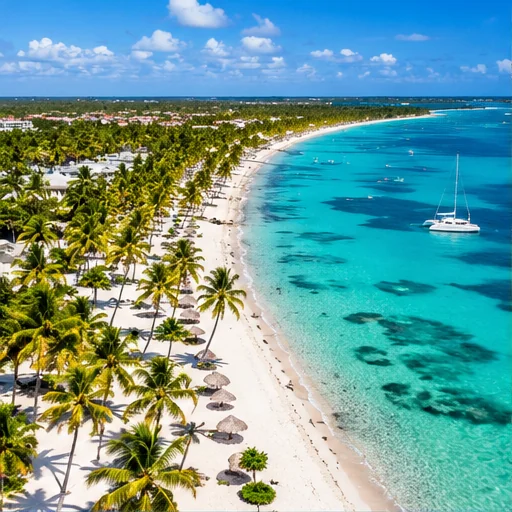
Responsible travel is not a demand for a perfect, joyless vacation. It is a way of making informed choices so your trip benefits local communities, respects cultural and natural places, and avoids unnecessary harm. In the Dominican Republic, that can mean choosing a qualified local guide, protecting reefs, paying fair prices, reducing waste, and recognizing that a resort's beautiful surroundings are also places where people live and work.
Begin with respect, not a checklist
The Dominican Republic has its own history, regional identities, social norms, and everyday rhythms. Visitors are guests in communities, not spectators at an attraction. Ask permission before photographing people, especially children, market vendors, or residents at work. A friendly conversation does not automatically imply consent to publish someone's image online.
Learn a few practical Spanish phrases even if you are staying in a resort. Polite greetings and thanks help make interactions less transactional. Do not assume everyone speaks English or works in tourism. Respect places of worship, residential areas, and community events; a site that appears interesting to visitors may have a private or sacred meaning to residents.
Spend in ways that reach local businesses
Tourism spending can support local livelihoods, but not every dollar reaches the surrounding community. Consider independently owned restaurants, local guides, artisans, and small accommodation providers when they meet your needs and safety standards. This does not mean you must avoid larger hotels; it means looking for opportunities to broaden the benefit of your visit.
For guided activities, ask who operates the tour, how guides are compensated, and whether local expertise is involved. Buy crafts from makers when possible and ask about materials and origins. Avoid products made from coral, protected wildlife, or items whose legal export status is uncertain. Pay agreed prices fairly, and negotiate respectfully where bargaining is customary rather than treating every interaction as a contest.
Choose excursions for substance and safety
A responsible excursion should have a clear itinerary, appropriate safety equipment, a weather policy, and guides who explain how to behave in the environment. For boats, confirm passenger capacity, life jackets, and operator procedures. For hikes, ask about route difficulty, conditions, water, and emergency plans. A low price is not a bargain if safety or environmental standards are compromised.
Ask whether the activity involves touching wildlife, feeding animals, chasing marine life, or damaging habitats. Operators who promise guaranteed close encounters may be prioritizing spectacle over animal welfare. Choose experiences built around observation, education, and appropriate distance. Do not support performances or photo opportunities that require wild animals to be restrained or distressed.
Protect beaches, reefs, and coastal habitats
Never stand on coral, break off pieces, or collect marine organisms. Keep fins and equipment away from reef surfaces, and maintain distance from turtles, rays, and other animals. Do not feed fish to attract them for photographs. Choose snorkeling operators that explain these rules before entering the water.
Take rubbish away from beaches and avoid leaving cigarette butts, bottle caps, or plastic packaging behind. Refillable water bottles and reusable bags can reduce waste, but only when you have access to a drinking-water source you trust. Do not sacrifice health or safety to meet an unrealistic zero-waste target.
Be mindful of dunes, mangroves, and nesting areas. Stay on designated paths and obey signs and protected-area rules. Beach access does not necessarily mean unrestricted access to sensitive habitats. If an area is closed, choose an alternative rather than trying to find an unofficial entrance.
Whale watching and other wildlife experiences
The Samaná region is associated with seasonal humpback whale watching, but timing, rules, and conditions must be checked with current official sources. A responsible operator follows applicable approach distances and observation rules, avoids chasing animals, and accepts that wildlife sightings are never guaranteed. If conditions are poor or a trip is canceled, that may reflect good judgment rather than poor service.
The same principle applies to birdwatching, cave visits, and encounters with terrestrial wildlife. Observe without disturbing nesting, roosting, or feeding behavior. Avoid using flash photography where prohibited or likely to disturb animals. A memorable experience does not require touching or handling wildlife.
Protected areas are not theme parks
Places such as national parks and protected coastal landscapes may have permits, visitor limits, seasonal restrictions, designated guides, or temporary closures. Rules can change because of conservation work, weather, or safety conditions. Confirm requirements with the relevant Dominican authorities or authorized local operators before traveling, especially when planning remote areas.
Do not assume a route is open because an old blog post describes it. In mountain and remote coastal areas, access can depend on road conditions, river levels, and local management decisions. Stay on approved trails and avoid damaging vegetation to create shortcuts. If a guide advises turning back, listen.
Water, energy, and the hidden footprint of a stay
Accommodation has an environmental impact through electricity, water, laundry, food, and waste. You do not need to give up comfort to reduce avoidable consumption. Reuse towels when practical, switch off unnecessary cooling when leaving the room if the property's guidance permits it, and avoid requesting daily linen changes without need.
Water use matters, especially in areas where infrastructure faces seasonal pressure. Take reasonable showers, report leaks, and avoid leaving taps running. When comparing hotels, look for specific operational practices rather than vague green slogans. Ask what a claimed certification covers and whether it is current.
Transportation choices without unrealistic promises
Flights often dominate a long-distance trip's transport footprint, but local choices still matter. Consolidating nearby activities into one outing can reduce repeated vehicle journeys and save time. Shared transfers may make sense for some routes; private transport can be more practical for families or travelers with accessibility needs. Choose safe, appropriate transport rather than making environmental claims that ignore local realities.
A multi-stop itinerary with frequent long drives may cost more and create unnecessary strain. Staying longer in one region can improve the experience and reduce transfers. If renting a vehicle, drive carefully, respect local road users, and avoid off-road driving in fragile natural areas unless it is explicitly authorized.
Food choices that connect you to the country
Eating locally can be one of the most enjoyable ways to understand Dominican culture. Try regional dishes and locally grown produce where suitable, while choosing establishments with sound hygiene practices. Ask questions about ingredients and preparation, especially if you have allergies. A respectful food experience values the people who prepare and serve meals as much as the photograph of the plate.
Be cautious with seafood or souvenirs claimed to be rare or exotic. If you are unsure whether a species is protected or legally harvested, choose something else. Responsible dining is about informed choices, not shaming visitors for unfamiliarity with local food traditions.
Respect workers and service providers
Tourism depends on housekeepers, drivers, cooks, guides, maintenance staff, and many others whose work is often invisible to guests. Treat staff with courtesy, respect working hours, and avoid demanding exceptions to safety or workplace rules. Tips may be appreciated where customary, but they should not substitute for fair business practices or be used to pressure workers into unsafe or inappropriate requests.
If something goes wrong, raise the issue clearly and calmly with the responsible business. Public complaints should be factual and proportionate. Do not post identifiable photographs of employees without their permission. A review can affect someone's livelihood; accuracy matters.
Protected-area access is not interchangeable with a tour advertisement
The Dominican Ministry of Environment identifies mangrove tours, caves and birdwatching as possible visitor activities at Los Haitises National Park. However, access to individual sites can be restricted even while other parts of the park remain open. A concrete example: on 23 June 2026 the ministry announced a temporary closure of Cueva de La Línea because its access dock had deteriorated, while stating that other authorized visitor areas would continue operating. References: https://ambiente.gob.do/parque-nacional-los-haitises/ and https://ambiente.gob.do/medio-ambiente-dispone-cierre-temporal-cueva-la-linea-los-haitises/ .
Before booking a protected-area excursion, request the specific itinerary, park authorization arrangements, current access confirmation and cancellation terms. Avoid providers who promise to bypass closures or take visitors into restricted caves. A tour that respects a closure is not inferior; it protects visitors and the place they came to see. The reopening status of any temporarily closed site must be checked again immediately before travel.
Cultural heritage and historical interpretation
Historic Santo Domingo and other cultural sites deserve more than a quick photo stop. Read interpretive materials, consider qualified guides, and approach difficult histories—including colonization, enslavement, migration, and inequality—with seriousness. Avoid reducing communities to stereotypes or treating poverty as a tourist attraction.
When visiting museums or heritage buildings, follow photography and access rules. Support preservation by paying legitimate admission charges and not touching fragile surfaces or removing objects. Cultural heritage belongs to the people and institutions that care for it, not to visitors seeking a souvenir.
Volunteer activities and donations: good intentions need scrutiny
Short-term volunteering can create unintended harm when visitors lack relevant skills or programs are not accountable to local communities. Be especially cautious about activities involving children, schools, or residential care institutions. Do not assume that direct contact with vulnerable people is beneficial simply because an organizer describes it as charitable.
If you want to contribute, research established local organizations, their governance, and the needs they identify themselves. Consider financial support or purchasing from community enterprises rather than arranging a one-off activity primarily for photographs. Avoid handing out gifts to children in public settings without understanding the local context.
How to recognize greenwashing
Marketing words such as “eco,” “sustainable,” and “community-based” are not proof of responsible operations. Look for specifics: waste management, water practices, local employment, wildlife policies, and credible third-party standards. A business that answers detailed questions openly may be more trustworthy than one that relies on vague claims.
Likewise, an attractive nature photograph does not establish that an excursion respects conservation rules. Ask what visitors are instructed to do, what happens when weather conditions are unsafe, and how the operator handles litter and wildlife encounters.
A responsible-travel checklist before departure
Choose accommodation based on location and documented practices, not slogans alone. Check official entry and protected-area rules. Book reputable operators with clear safety and wildlife policies. Bring reusable essentials when practical. Learn basic Spanish greetings. Review local customs and cultural-site rules. Carry travel insurance appropriate to your activities. Build a realistic itinerary that avoids unnecessary long transfers.
During the trip: small actions with lasting value
Ask permission before taking portraits. Stay on marked trails. Do not touch reefs or feed wildlife. Dispose of rubbish properly. Choose local food and services when they meet your needs. Respect closures and staff instructions. Report environmental concerns to appropriate authorities or property management rather than confronting people in unsafe situations.
Frequently asked questions
Is staying at an all-inclusive resort irresponsible? Not inherently. Compare the property's actual practices and look for ways to support local businesses through meals, tours, and purchases outside the resort when appropriate.
Are wildlife tours always harmful? No. Well-managed observation can support education and conservation, but the operator's behavior and compliance with rules matter more than promotional language.
Should I avoid remote beaches? Not necessarily. Visit with suitable transport, follow access rules, respect local communities, and leave no waste. Remote does not mean unregulated.
Can I travel responsibly on a budget? Yes. Many of the most meaningful choices—respecting people, reducing waste, choosing fewer transfers, and following wildlife rules—do not require luxury spending.
Visiting protected areas: confirm access before booking
National parks and protected areas can require admission tickets, authorization or use of designated visitor zones; the conditions depend on the site and activity. Before arranging visits to Jaragua and Bahía de las Águilas, Los Haitises, Cotubanamá and Saona, or other reserves, check the Ministry of Environment’s official protected-area visitor service and ask the authorized operator which access conditions apply. Areas or individual caves and trails may close temporarily for conservation or safety; do not treat an itinerary or advertised excursion as proof that access is available. Follow ranger instructions, stay in permitted zones and avoid disturbing wildlife.
Final thought
Responsible travel is not about presenting yourself as a better visitor. It is about leaving places and relationships no worse for your presence, while allowing the people who live there to shape how tourism develops. The Dominican Republic offers extraordinary experiences; treating its communities and environments with care makes those experiences more meaningful.
Official sources
Rules, permits and entry requirements may change. Check official sources before traveling.