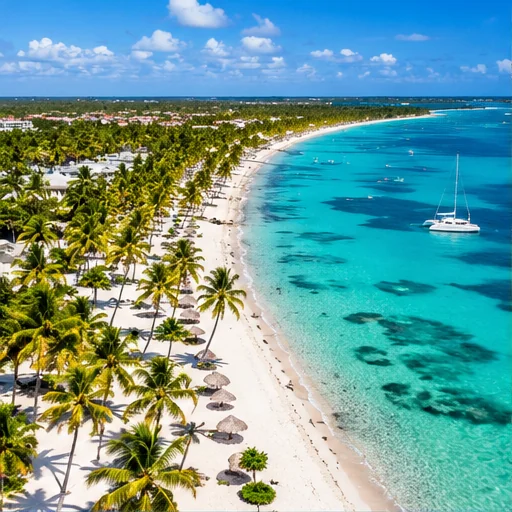
The Dominican Republic rewards travelers who decide what kind of vacation they want before choosing a hotel. Its beaches, historic neighborhoods, mountain valleys and rural coastlines are not interchangeable. A first-time visitor who books a remote villa expecting easy resort-style transport can spend too much of the trip arranging taxis. Someone who stays exclusively in a resort while hoping to discover local food and culture may leave feeling they saw very little. Neither style is wrong; the problem is a mismatch between expectations and geography.
Start with the trip you actually want
For an easy beach-focused break, the Punta Cana–Bávaro area offers a large concentration of resorts, organized transfers and bookable excursions. Bayahíbe is another option, particularly for travelers who value a smaller coastal base and excursions toward Saona Island. For independent beaches, restaurants and excursions, Las Terrenas in the Samaná Peninsula deserves consideration, though transfers and road travel need more planning. Santo Domingo offers colonial architecture, museums, contemporary dining and urban life, but it is not a substitute for a classic beach resort. Puerto Plata and its surroundings combine historic sites, beaches and activities on the north coast. Jarabacoa and Constanza are better choices for mountain scenery and outdoor pursuits than for warm-water beach days.
Choose one primary experience and one secondary interest. For example: “beach relaxation with one cultural excursion,” or “city food and history with two days on the coast.” This makes hotel selection and budgeting substantially easier.
Understand the map before choosing an airport
The country is larger than a resort brochure makes it appear. Punta Cana, Santo Domingo, Puerto Plata, Santiago and Samaná are different gateways, and the nearest airport is not always the one with the best flights or transfer options. A flight that is slightly cheaper can become expensive after a long private transfer or an additional hotel night. When comparing flights, record the airport code, arrival time, luggage charges, transfer cost and expected journey time to your accommodation.
Avoid scheduling a long cross-country drive immediately after an overnight flight. Driving conditions, urban congestion, rain and unfamiliar roads can make an ambitious arrival-day itinerary unpleasant. For late arrivals, a prearranged transfer or first-night stay near your gateway can be worth the additional cost.
How long should you stay?
Four to five nights: choose one base and resist adding distant day trips. A beach stay with one carefully selected outing often feels more satisfying than visiting three regions superficially.
Seven nights: one base remains the most comfortable option for many first-timers. Alternatively, combine a city and a nearby coastal area when transfers make sense. Do not treat all places on the map as easy day trips.
Ten to fourteen nights: two bases can work well. Santo Domingo plus a coastal region offers cultural variety; a north-coast base plus Samaná can appeal to independent travelers; a beach region plus the highlands creates a striking change of pace. Verify road time and transport availability before committing.
Accommodation: what the listing might not tell you
A room's nightly price is only one part of its value. Read recent reviews for recurring comments about noise, hot water, air conditioning, Wi-Fi reliability, housekeeping and the accuracy of the location pin. Check whether the beach is public and accessible on foot, whether the accommodation provides towels or loungers, and whether restaurants and groceries are realistically reachable without a vehicle.
All-inclusive plans are convenient when you expect to eat and drink mostly on the property, especially for families. They may be less attractive if your goal is to spend every day visiting towns and independent restaurants. Apartment stays can offer flexibility, but consider electricity policies, cleaning fees, kitchen equipment and arrival instructions. In rural locations, confirm access roads and whether you will need a car.
Weather and seasonal planning
The Dominican Republic is tropical, but weather is not identical across the island. The Atlantic hurricane season officially runs from June 1 through November 30. That does not mean every trip during those months is disrupted, nor does travel outside the season guarantee perfect weather. Rain can be localized and brief; strong storms can also alter flights, roads and boat excursions. Compare the climate of your specific region, check forecasts close to departure and keep outdoor activities flexible.
Beach conditions also change. Surf, currents, wind and sargassum accumulation vary by coastline, season and weather. Do not choose a beach exclusively from a photograph taken on a calm day. Ask accommodation staff or a reputable local operator about current conditions, and follow posted safety guidance.
Documents, entry formalities and health
Entry requirements depend on nationality, residence status, purpose of travel and current regulations. Confirm passport validity, visa eligibility and any applicable conditions with the Dominican authorities or a Dominican consulate. Travelers should use the official free E-Ticket portal at https://eticket.migracion.gob.do/ when the electronic entry/exit process applies. Be cautious of third-party websites charging for forms that the government provides free of charge.
Before departure, review your insurance coverage for emergency medical care, trip interruption and planned activities. Carry essential prescriptions in original packaging, together with appropriate documentation where required. If you plan hiking, diving or other higher-risk activities, check whether your policy covers them. Use reliable drinking water and food hygiene precautions appropriate to your circumstances; seek individualized medical advice well before travel.
Money: build a complete budget
Start with airfare and accommodation, then add airport transfers, local transport, meals outside the hotel, excursions, tips, travel insurance and a contingency. A cheap hotel far from the activities you want can cost more than a central option. Similarly, a resort package may offer good value if it genuinely replaces most meals and entertainment, but not if you pay again for every outing.
Carry a practical combination of payment methods. The Dominican peso is the local currency; some tourist businesses quote prices in US dollars. Always check the transaction currency and conversion before approving payment. Avoid assuming a quoted excursion price includes taxes, park fees, equipment or hotel pickup. Confirm cancellation conditions in writing.
Getting around safely and efficiently
Use established airport transfer providers or transport arranged through reputable accommodations, especially for arrivals after dark. For intercity routes, investigate recognized bus operators and current schedules; remote beaches and mountain trailheads often require additional local transport. Rental cars offer flexibility but require confidence with local traffic, road conditions, parking and insurance terms. Do not underestimate distances or rely on a navigation app's most optimistic estimate.
For excursions, ask who operates the trip, what safety equipment is provided, the approximate group size, the total travel time and the refund policy if weather cancels the activity. Boat trips should be treated differently from ordinary road tours: sea conditions may change quickly, and reputable operators should be willing to explain safety procedures.
A comfortable seven-day first-trip structure
Day 1: arrive, transfer, settle in and eat locally without an ambitious schedule. Day 2: explore your immediate neighborhood or beach; learn where the pharmacy, grocery store and reliable transport options are. Day 3: choose one signature experience—historic sightseeing, a guided nature outing or a carefully selected boat excursion. Day 4: keep a lighter day for beach time, cafés or a relaxed cultural visit. Day 5: plan a second activity based on weather and energy. Day 6: revisit your favorite area, shop for locally made goods or enjoy a special meal. Day 7: leave enough time for the airport and unexpected traffic.
This is a framework, not a rigid schedule. Replace activities according to your destination; a Jarabacoa itinerary should not look like a Punta Cana resort itinerary.
Common first-time mistakes
Booking a hotel before deciding on the region; mistaking straight-line distance for easy road travel; assuming all beaches have the same swimming conditions; scheduling multiple long transfers on a short trip; buying excursions before checking operator standards; using unofficial entry-form websites; and neglecting the actual total cost of accommodation are all avoidable errors. The simplest improvement is to plan around where you will spend your days, not around whichever listing looks cheapest.
Final planning checklist
Confirm your travel documents and official entry requirements; compare airports and transfer costs; choose a region aligned with your interests; review accommodation location and cancellation terms; check weather and seasonal risks; obtain appropriate insurance; plan no more than a few high-priority activities; and leave flexibility for discoveries. The strongest first trip is not the one that covers the most places. It is the one that makes the best use of your time.
Official sources
- Dominican Directorate General of Migration: https://migracion.gob.do/
- Official E-Ticket: https://eticket.migracion.gob.do/
- Dominican Ministry of Tourism: https://mitur.gob.do/
- US National Hurricane Center (Atlantic basin): https://www.nhc.noaa.gov/
Official sources
Rules, permits and entry requirements may change. Check official sources before traveling.