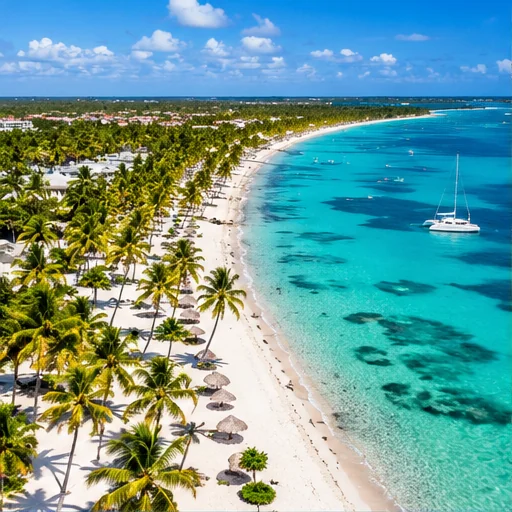
A boutique hotel can be a strong alternative to the large all-inclusive resort experience in Punta Cana. The attraction is not simply a smaller building: it is the possibility of distinctive design, attentive service and greater freedom to discover local restaurants and beaches. Yet 'boutique' is a loosely used marketing term, and some listings are essentially small apartment buildings with limited guest services. The right booking starts with a careful understanding of the property, its location and your own travel style.
Decide what boutique means for your trip
One traveler imagines a quiet design-focused hideaway with a pool and personal recommendations; another wants a small beach hotel with breakfast and easy access to restaurants. Those are not identical products. Before searching, identify your nonnegotiables: staffed reception, daily housekeeping, restaurant, beach access, air conditioning, secure parking, reliable Wi-Fi, accessibility or a private terrace.
A hotel with 15 rooms is not automatically more intimate than a well-managed resort, and a property with 'boutique' in its name is not necessarily independent or upscale. Evaluate the actual services and atmosphere. Small properties can be memorable, but they may also have fewer backup options when a facility is unavailable.
Where to look: location changes everything
Bávaro and El Cortecito: Some smaller accommodations in and around established visitor areas offer a more independent experience, with restaurants and shops potentially nearby. Walkability varies dramatically by street. Inspect the map, actual road crossings and whether the beach can be reached without an awkward detour.
Los Corales: Often considered by travelers seeking apartment-style accommodation and access to visitor services. Distinguish beachfront properties from inland streets and verify the legal or practical route to the sand. 'Five minutes to the beach' may refer to driving, not walking.
Cap Cana: A polished setting can appeal to travelers seeking upscale accommodation, but access to beaches, restaurants and facilities may depend on the exact development and its entry arrangements. Do not assume every amenity within the wider area is open to all guests.
Uvero Alto and quieter coastal sectors: Privacy can come with a greater reliance on cars and arranged transfers. If independent dining is a priority, check travel time to the restaurants you actually want to visit.
The broad Punta Cana label hides substantial distances. A beautiful small hotel far from everything can become inconvenient without a vehicle.
The real difference from an all-inclusive resort
A boutique stay may provide flexibility to eat when and where you like, and may feel less programmed. It can also mean paying separately for breakfast, lunch, dinner, beach loungers, excursions and airport transfers. Do not compare its room rate directly with a resort package without adding these costs.
The trade-off is worthwhile for travelers who genuinely enjoy independent planning. If you want three restaurants, several pools, evening shows and a children's club within one compound, a small hotel may not be the best fit. Choosing boutique is a preference, not a mark of sophistication.
Assess beach access with precision
A listing's headline photograph may show a nearby public beach rather than a private beach directly in front of the hotel. Ask whether access is direct, how far the route is on foot, whether it requires crossing a road and whether there are any restrictions. Confirm whether beach chairs, umbrellas or beach-club access are included.
The appearance of beaches changes with wind, storms and seasonal sargassum. Recent, dated photographs are more useful than a permanent marketing image. Swimming conditions also vary; a beautiful beach is not necessarily a sheltered one.
What to ask a small property before booking
Ask about reception hours, late check-in, airport pickup, luggage storage, security arrangements, drinking water, electricity backup and the reliability of internet access if you plan to work remotely. Check whether the property has a generator or alternative power provision, but do not assume a backup system runs every amenity.
Confirm whether the room is serviced daily, how linens are changed, whether breakfast is included and what happens if an advertised restaurant closes for a day. For apartments or villas, ask whether cleaning fees, electricity charges or refundable deposits appear only at checkout.
For travelers with mobility needs, verify the number of stairs, elevator availability and access to the beach or pool. Small properties may have charming architecture that is difficult to navigate with a stroller or wheelchair.
Read reviews like an investigator
Look for patterns in recent reviews: repeated comments about noise, water pressure, staff responsiveness, cleanliness, air-conditioning performance or the walk to the beach. A review saying 'great location' is less useful than one describing the exact route to a restaurant or grocery store.
Check whether photographs are guest-submitted and current. Look at the date of management responses and whether recurring problems appear to have been addressed. A small number of perfect ratings should not automatically outweigh a larger set of detailed mixed reviews. Be cautious when the property name or management company has changed recently.
Dining independently: opportunity and responsibility
One of the strongest arguments for a boutique hotel is the freedom to explore Dominican and international food beyond a resort buffet. In Punta Cana, however, restaurant choice depends heavily on where you stay. A place that looks close on a map may be separated by a highway, a gated development or poorly lit streets.
Build a realistic food plan: where will you eat breakfast, what is open near your hotel for a late arrival, and how will you get home after dinner? Ask the hotel for suggestions, but compare them with independent recent reviews. Try local dishes such as mangú at breakfast, sancocho when available, or fresh fish prepared by a reputable kitchen. Menus and availability vary; no single dish is guaranteed everywhere.
Budget the entire stay
Imagine a boutique room at $125 per night and an all-inclusive at $250 for two adults. Over five nights the advertised difference is $625. That is not automatically a $625 saving: add breakfast, other meals, drinks, local rides, airport transfers and any beach-club fees. Conversely, if you spend most days exploring and eating off-property, paying for unused resort meals may make little sense. These are illustrative figures, not live prices.
Use the same dates, taxes, cancellation rules and room occupancy when comparing. Check whether the listing is a hotel, serviced apartment or vacation rental; consumer protections and support arrangements may differ.
A thoughtful four-day boutique itinerary
Day one: arrange airport pickup, check in and walk the immediate neighborhood during daylight. Identify a grocery or convenience store and a dependable nearby dinner option. Day two: spend a full beach day and learn which services are included versus paid. Day three: plan one excursion, leaving enough time for an unhurried evening meal. Day four: enjoy a flexible morning, visit a different beach or cultural stop if transport makes sense, and confirm departure logistics. Do not cram multiple distant activities into a short stay.
When a boutique hotel is the wrong choice
A small property may disappoint if you expect guaranteed daily entertainment, multiple pools, children's programs or all-day dining. It may also be unsuitable if you need comprehensive accessibility services that the hotel cannot document. For a late-night arrival with young children, a full-service hotel with round-the-clock reception may be easier than an apartment with self-check-in instructions.
If your priority is a guaranteed beachfront location, do not compromise on this simply because a property's design photographs look appealing. The right hotel is the one that supports the holiday you want to have.
A practical pre-booking checklist
Confirm the exact map pin; walking route to the beach; property type; reception and check-in hours; breakfast and housekeeping; Wi-Fi and power backup; room air conditioning; safety and transportation options; accessibility; final fees; cancellation terms; and a reliable contact channel. Keep copies of the listing description and written answers to important questions.
Compare small hotels and independent stays
This Expedia search can help you explore options, but the 'boutique' label is not consistently applied across booking platforms. Search beyond property names, inspect actual photographs and verify amenities independently.
Compare boutique hotels in Punta Cana
Frequently asked questions
Are boutique hotels necessarily cheaper than resorts?
No. Some are luxurious and expensive; others are modest. Compare total costs and what is included, not just the nightly rate.
Is a boutique hotel the same as a vacation rental?
No. Some offer staffed hotel services; others are apartment-style accommodations. Verify who manages the property and what guest support is available.
Can I walk everywhere in Punta Cana?
Not generally. Certain neighborhoods offer local walkability, but the wider region is spread out. Inspect actual walking routes and arrange transport for longer journeys.
Do smaller hotels have private beaches?
Some may have direct access or beach arrangements, but many do not. Confirm the precise access terms before booking.
Should I rent a car?
It depends on location and your plans. If you intend to explore widely, a vehicle may help; if you mainly want beach time and a few excursions, prearranged transport may be simpler.
Official sources
Rules, permits and entry requirements may change. Check official sources before traveling.