Best for: independent travelers, couples who prefer smaller coastal towns, photographers and visitors who value unhurried days. Less suitable for: people seeking a large all-inclusive resort district, extensive nightlife or a town where every excursion can be done without transport.
Why Río San Juan deserves its own stop
Río San Juan occupies a different place in the Dominican north-coast travel story from Puerto Plata, Sosúa or Cabarete. It is a smaller community with fishing and local commerce alongside visitor services. Its appeal is not a single giant resort complex: it is the chance to combine the Gri Gri lagoon, coastal scenery and nearby beaches while keeping a manageable daily rhythm. The surrounding coastline rewards travelers who can spend time observing rather than rushing from attraction to attraction.
The first planning decision is whether Río San Juan will be your base for several nights or a stop during a wider north-coast road trip. A day trip can cover a lagoon outing and one beach, but an overnight stay gives you more flexibility for weather, a relaxed dinner and a quieter morning. Do not confuse short distances on a map with easy travel: road conditions, parking and boat availability still affect the day.
Laguna Gri Gri: what a good visit looks like
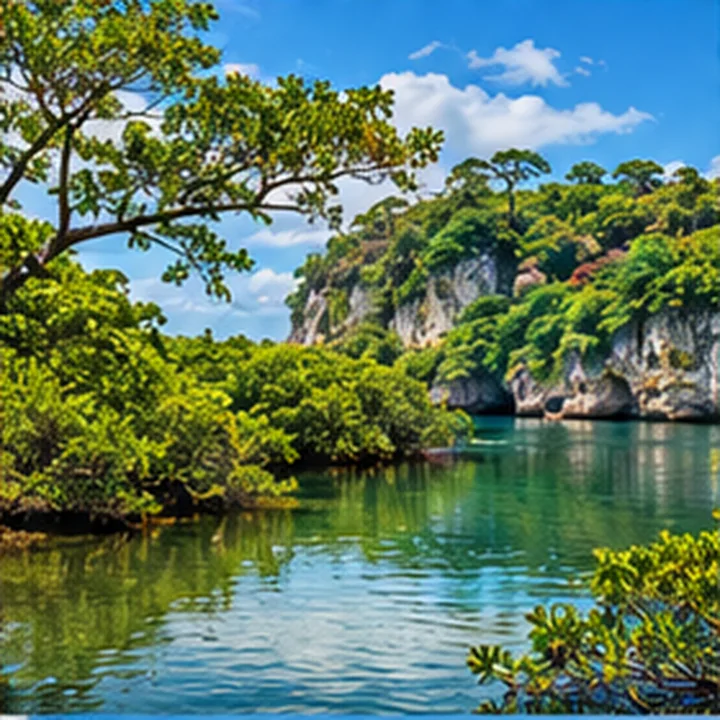
Laguna Gri Gri is a defining feature of Río San Juan. Boat outings are commonly associated with the lagoon's mangrove channels and the adjacent coast. The experience is best approached as a small-boat nature excursion, not a guaranteed wildlife spectacle. Bird sightings, visibility and sea conditions vary; no responsible operator should promise specific animals or a perfectly calm ride.
Before paying, ask exactly where the boat will go, how long the outing lasts, how many people share the boat, whether life jackets are provided in suitable sizes and what happens if offshore conditions are poor. A short lagoon circuit and a longer trip that enters open water are not interchangeable products. Families with small children should ask whether the route remains sheltered and whether a private departure is available.
Protect the habitat by staying in the boat where instructed, avoiding loud music in sensitive areas and never feeding birds. Keep cameras and phones secured against spray. A dry bag and sandals that can tolerate water are more useful than an elaborate beach outfit. If you want photographs, ask the captain whether the boat can pause safely rather than standing suddenly or leaning over the side.
Playa Caletón and nearby beach choices
Playa Caletón is a well-known coastal stop near Río San Juan, recognizable for its compact cove setting. Its smaller scale is part of the attraction, but it also means the beach can feel crowded at popular times. The sand area, shade and available services may differ with conditions and the season. Check the actual shoreline and water before entering, especially after rough weather.
A beach that looks protected in a photograph is not automatically safe every day. Watch the surf and ask locals about currents and submerged hazards. If traveling with children, choose the day's swimming location based on conditions rather than reputation. Bring cash for incidental expenses and agree on any chair, food or boat charges before accepting a service.
Playa Grande, farther along this part of the north coast, offers a different landscape and a more expansive beach experience. It should not be treated as identical to Caletón: wave exposure and swimming suitability can differ substantially. A sensible itinerary selects one main beach for a long afternoon rather than trying to squeeze several shorelines into a short visit.
Where to stay: town convenience or coastal seclusion
Staying close to Río San Juan town can make meals and local errands simpler. This is useful if you want to walk out for breakfast, arrange a boat trip or experience everyday community life. Ask about evening street noise, parking, air conditioning and whether the property has reliable hot water. Smaller lodging options may have fewer front-desk services than major resorts, so confirm check-in arrangements in advance.
Properties farther from town can offer more space or a quieter setting, but their value depends on transport. A cheaper room is not necessarily cheaper after repeated taxi journeys. Ask for a precise location, not only a marketing description such as “near Playa Grande.” Check whether the access road is paved and whether the property has on-site dining if you plan to arrive late.
For a family, practical features may matter more than a dramatic balcony: a safe pool layout, shaded outdoor space, reliable power, room configuration and proximity to food. For a couple, the decision may favor quiet evenings and a scenic setting. Compare the total cost, including breakfast, transfers and taxes, before choosing.
Food: how to enjoy the local coast
Río San Juan is a good place to look for straightforward Dominican coastal meals rather than expecting a large international restaurant district. Fish preparations, rice, beans, plantains and stews are useful starting points when exploring menus. Ask what is available that day rather than assuming a particular fish species is always fresh or locally caught. Prices can change with catch, season and restaurant style.
A restaurant beside the water can be memorable, but a view does not replace basic checks: recent reviews, clear pricing, clean food handling and an understandable menu. For seafood, ask whether the price is per portion or by weight. Confirm the final amount before ordering an expensive whole fish. People with allergies should explain them explicitly; do not assume a sauce is free of shellfish or nuts.
If you are planning an early excursion, confirm breakfast hours the night before. Small-town dining can be more variable than resort dining, particularly outside busy travel periods. Keep one flexible meal in your schedule instead of making every lunch and dinner dependent on a particular establishment.
Getting here and moving between beaches
Río San Juan sits on the northern coastal corridor, so it can fit into a route linking other towns in the region. The best arrival airport depends on where you are flying from and what else you intend to visit. Compare flight schedules and ground-transfer costs rather than selecting an airport by distance alone. A prearranged driver can be worthwhile for late arrivals or travelers unfamiliar with the roads.
A rental car gives flexibility for dispersed beaches and nearby towns, but driving requires attention to motorcycles, unexpected stops and nighttime visibility. Avoid scheduling a long unfamiliar drive immediately after an overnight flight. If using taxis, arrange return pickup before heading to a less developed beach; mobile signal and available vehicles may be inconsistent.
Walking may work for some central errands, but do not assume every attraction is walkable from every hotel. Verify the route on a map and ask about sidewalks, traffic and lighting. The easiest trip is often the one with fewer transfers and more time at each stop.
Three-day itinerary without rushing
Day 1 — Arrive and learn the town. Check in, identify a convenient place to eat and walk around central Río San Juan while it is light. Confirm lagoon departure options for the following day and ask about the weather outlook. Choose a relaxed dinner instead of committing to a late excursion after travel.
Day 2 — Lagoon and cove. Take a morning Gri Gri outing if conditions are suitable. Leave time to enjoy the experience rather than treating the boat as a transport shortcut. Have lunch and spend the afternoon at Playa Caletón if the beach and surf are comfortable. Keep a second beach as a backup, not an obligation.
Day 3 — The wider coastline. Visit Playa Grande or another coastal viewpoint, depending on conditions and your interests. Allow time for an extended meal and return before dark if driving onward. If the weather is poor, replace beach time with a slower town day rather than taking unnecessary risks on the water.
Budget decisions that make the biggest difference
The largest variable is often transport rather than the room itself. Compare a centrally located stay with a remote property using the actual number of taxi rides you expect. For boat tours, ask about the full group price, private-versus-shared arrangements and what is included. Never assume the advertised rate covers every stop or a return journey.
Keep cash in small denominations for local services, but avoid carrying unnecessary valuables to the beach. If booking a package through an intermediary, confirm the actual operator and cancellation terms. Flexible planning is especially valuable when your main activities depend on sea conditions.
Responsible travel and safety
Mangroves are living coastal ecosystems, not merely scenery. Avoid touching roots, leaving rubbish or pressuring boat operators to enter restricted channels. At beaches, respect warnings, do not swim alone in rough surf and keep an eye on changing conditions. If a guide recommends canceling a boat departure, treat that as a safety decision rather than poor service.
For medical or accessibility needs, contact accommodation and tour providers directly about stairs, boarding arrangements and nearby services. Small boats and natural coves may be difficult for travelers with limited mobility. Never infer accessibility from a promotional photograph.
Before you book: a useful checklist
- Choose between a short stop and a two- or three-night stay.
- Confirm the exact location of lodging relative to the town and beaches.
- Ask lagoon operators about route, life jackets, duration and weather cancellation.
- Budget for round-trip transport, not only outbound fares.
- Verify recent beach conditions and local opening hours.
- Keep at least one flexible afternoon in case the sea is rough.
Frequently asked questions
Is Río San Juan a good all-inclusive destination? It is better known for a quieter, independent coastal experience. Travelers who want a large concentration of all-inclusive options may prefer other resort areas.
Can I see the lagoon and beach in one day? Often yes, provided departure arrangements and weather cooperate. Overnight visitors have more flexibility and less pressure to rush.
Is Playa Caletón always safe for swimming? No beach is safe in every condition. Assess the water on the day and follow local guidance.
Do I need a car? Not necessarily for a short town-focused stay, but independent transport can make dispersed coastal stops easier. Compare the cost against arranged transfers.
Official planning resources
For protected-area rules and environmental notices, consult the Dominican Ministry of Environment. For entry procedures, use the Directorate General of Migration and its official e-ticket service. These resources do not replace checking individual tour operators' current schedules.
Official sources
Rules, permits and entry requirements may change. Check official sources before traveling.