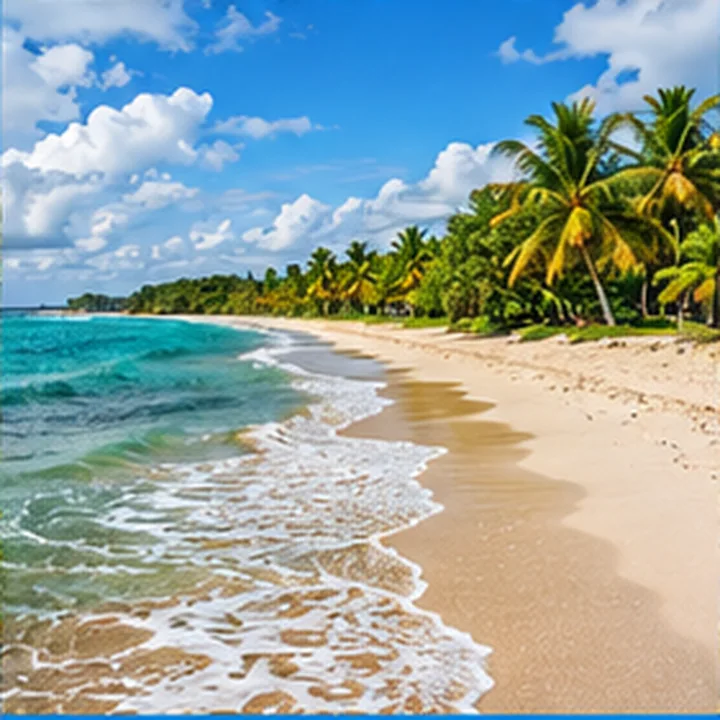
Nagua is not a miniature Punta Cana, and that is precisely why some travelers will appreciate it. This working coastal city is the capital of María Trinidad Sánchez province, on the northeastern Dominican Republic's Atlantic side. Rice, coconuts, cacao, fishing, commerce and ordinary daily routines shape the atmosphere more than hotel entertainment schedules. It is an appealing stop for independent travelers who want to see a different side of the country, explore quieter stretches of coast, and build a road trip between the north coast and the Samaná Peninsula.
The essential distinction: Nagua is a practical regional base, not a promise of calm, swimmable water at every beach. The Atlantic coast changes character quickly. Some shorelines are scenic but exposed; others have protected pockets, shallow sections or conditions suitable for a relaxed visit. Plan around the specific beach and the day's conditions, rather than assuming that every blue patch on a map is a safe swimming spot.
At a glance: who should choose Nagua?
Choose Nagua if you enjoy local restaurants, independent driving, uncrowded scenery and a flexible itinerary. It works particularly well as a one- or two-night stop on a longer northeast-coast journey. A visitor seeking a luxury resort, extensive English-language tourist services or organized entertainment every evening may be happier in a more established resort area. Families can enjoy the coast too, but should select beaches carefully and ask locally about currents and lifeguard coverage.
A car gives you much more freedom than relying on individual taxis. Nagua's attractions are spread across the wider province, and the famous spots often listed under “Nagua” are not necessarily within Nagua city. For example, beaches and attractions near Cabrera and Río San Juan belong to the same province but require separate travel. Distinguishing city, province and neighboring destinations prevents misleading day plans.
Understanding the geography before you book
Nagua sits along a coastal corridor that connects the northeastern shore with inland roads and the Samaná region. The urban center is a place to shop, eat and arrange transport, while the best scenic stops are generally outside its busiest streets. If you are driving toward Las Terrenas or Samaná, Nagua can provide a useful pause before continuing. If your priority is Playa Grande, Laguna Dudú or Río San Juan, consider staying closer to those attractions instead of automatically booking in Nagua.
Check the exact accommodation address on a map. A property described as “Nagua area” might be in a rural community, along a highway, or near a beach with limited evening services. Compare the distance to restaurants, fuel, pharmacies and your planned excursions. A lower room rate loses its appeal if every meal requires an expensive round-trip drive.
Beaches: what is actually nearby?
La Poza de Bojolo
Nagua's municipal tourism office identifies La Poza de Bojolo as a coastal attraction, describing a long coconut-lined beach and a characteristic natural pool or “poza.” This makes it a sensible starting point for travelers looking for a quieter coastal outing. The name should not be interpreted as a guarantee of safe swimming in every section or at every tide. Ask about current conditions and avoid entering rough water, particularly after heavy rain or strong winds.
Bring drinking water, sun protection and footwear that works on hot sand and uneven surfaces. Facilities and vendors can vary; do not assume showers, card payments or reliable shade rentals will be available. The most rewarding visit may simply be a slow walk, photography and a meal nearby rather than an ambitious swim.
Beyond the city: the wider María Trinidad Sánchez coast
The provincial government highlights Playa Grande, Playa Diamante, Playa Caletón and Playa El Bretón among the wider province's attractions. These are useful names for a regional road-trip shortlist, not all beaches inside Nagua itself. Travel time depends on where you start and on road conditions. Playa Grande is known for its dramatic coastal setting, while smaller coves and beaches around Cabrera and Río San Juan may offer a very different experience. Always verify public access, weather, surf and any current restrictions before setting out.
Do not try to “collect” every beach in one day. Two well-chosen stops, a long lunch and enough daylight for the return drive generally create a better experience than rushing between distant pins.
Nature beyond the beach
María Trinidad Sánchez has wetlands, coastal vegetation and protected landscapes. The provincial government identifies Gran Laguna, between the Bacuí and Boba rivers, as a coastal wetland and wildlife refuge. That makes it an interesting ecological reference point, but it does not automatically mean there is a visitor center, maintained public trail or bookable boat tour. Verify access with local authorities or a reputable guide before planning a dedicated excursion.
Laguna Dudú and Cabo Francés Viejo are frequently mentioned in regional tourism material. Both should be treated as separate outings within the broader province, not quick walks from downtown Nagua. For any lagoon activity, confirm the operator's safety procedures, age restrictions and current operating status. For coastal cliffs and viewpoints, stay away from unstable edges and avoid unofficial paths.
Food: where Nagua's character comes through
Nagua is a good place to eat Dominican food without making every meal a resort experience. Look for a busy local comedor at lunchtime, when a daily plate may include rice, beans, stewed meat or fish, plantains and salad. Ask what has been prepared that day rather than expecting a long printed menu. Along the coast, fresh fish is a regional specialty, but freshness, preparation and price vary by establishment.
The provincial government specifically notes the region's seafood traditions and agricultural products, including rice, coconut and cacao. Those ingredients provide a useful lens for exploring local food: try fish with tostones, a coconut-influenced dish when available, or a simple Dominican breakfast of mangú and eggs. A restaurant that is popular with local families and has clear prices can be a better choice than a flashy roadside sign.
For travelers with dietary restrictions, explain them clearly in Spanish. “Sin mariscos” means without shellfish; “sin gluten” does not guarantee a gluten-free preparation area. Ask about sauces, shared fryers and ingredients rather than assuming a dish is suitable based on its name.
Where to stay: choosing location over labels
In Nagua itself, prioritize a well-reviewed small hotel or guesthouse with reliable air conditioning, clean bathrooms, secure parking if driving, and recent comments about nighttime noise. A central location makes errands easier, but traffic and street noise may be more noticeable. A coastal property can be pleasant, yet distance from food and services matters, especially after dark.
Ask three questions before booking: Is the exact location pinned correctly? Does the property have dependable hot water and electricity arrangements? Is there staffed check-in at your expected arrival time? If the listing promises “beachfront,” inspect recent guest photos and the map; beachfront does not necessarily mean a swimmable beach.
For a beach-focused stay, compare accommodations in the Cabrera or Río San Juan area as well. The right base depends on whether your itinerary is about city life, the coastal highway or a particular beach.
Getting there and getting around
Nagua is reached by road. Driving provides the simplest way to combine beaches, restaurants and provincial attractions, but allow extra time for rain, roadwork, traffic and slow sections. Never rely solely on a navigation app's optimistic travel estimate. If arriving by intercity transport, confirm the current operator, departure point and last service before booking a room outside the city.
For short urban trips, use an established taxi or a locally recommended driver and agree on the fare before departure. For a full-day regional outing, a prearranged driver can be more practical than improvising several rides. Share your planned route with someone, keep offline maps available and avoid driving unfamiliar rural roads late at night.
A practical two-day Nagua itinerary
Day one: local orientation. Arrive with daylight remaining, check into your accommodation and walk or drive through the commercial area to get your bearings. Eat a Dominican lunch, purchase water and supplies, then head to La Poza de Bojolo if weather and road conditions are suitable. Keep the afternoon flexible: a relaxed coastal stop is better than entering dangerous surf to meet a checklist. Return for dinner in town.
Day two: choose one regional direction. If continuing west, explore a suitable coastal stop toward Cabrera or Río San Juan and then proceed to your next base. If continuing east, use the day to move toward the Samaná Peninsula, stopping only where access is clear. Nature-focused travelers can research a reputable guide for a provincial lagoon or protected-area outing, but should confirm availability in advance.
If you have a third day, spend it on the coast rather than adding too many disconnected attractions. The northeast rewards slower travel.
Budget planning without misleading numbers
Do not build a budget around an old article's nightly rate or restaurant price. Prices change by season, demand, exchange rate and service level. Instead, compare total trip cost: room, transport, fuel or driver, meals, parking, admission charges and contingency. A centrally located hotel with breakfast may be cheaper overall than a remote room that requires multiple taxi rides.
Carry some Dominican pesos for small purchases, while keeping valuables discreet. Ask whether tax and service are included before ordering, especially where menus are informal. For paid excursions, confirm what is included, cancellation terms and whether a guide is licensed or otherwise appropriately authorized.
Safety, weather and responsible travel
Atlantic surf is the major natural hazard to take seriously. A beautiful beach can still have rip currents or steep drop-offs. If conditions are rough or local advice is negative, stay out of the water. During heavy rainfall, avoid flooded roads and low crossings. Keep an eye on official weather alerts during the Atlantic hurricane season and remember that rain can disrupt access even when a storm is far away.
Use reef-safe habits where possible, take all trash away from quieter beaches and do not disturb coastal wildlife. Avoid drones in restricted areas or near people without permission. Respect private property, especially where informal coastal paths cross residential land.
Common planning mistakes
The first is confusing Nagua city with the whole province. The second is booking a remote “Nagua” property without checking distances. The third is assuming all Atlantic beaches are safe for swimming. The fourth is packing too many regional attractions into a single afternoon. Finally, do not treat online opening hours, beach access information or tour prices as permanent facts. Confirm important details shortly before travel.
Frequently asked questions
Is Nagua a good first stop in the Dominican Republic?
It can be, particularly for travelers comfortable with independent transport and everyday Dominican settings. For someone who wants a seamless all-inclusive arrival, it is not the obvious first choice.
How many nights should I spend in Nagua?
One or two nights can work well as part of a road trip. Stay longer if you specifically want to explore nearby communities and coastal landscapes at a slower pace.
Is Nagua the same as Río San Juan or Cabrera?
No. They are different municipalities within María Trinidad Sánchez province. Many lists of “things to do in Nagua” actually describe attractions elsewhere in the province.
Can I visit without renting a car?
Yes, but exploring beaches outside town requires more planning. Arrange reliable transport and confirm return options in advance.
Is La Poza de Bojolo always safe for swimming?
No beach should be assumed safe at all times. Ask about currents, tides and recent conditions, and choose land-based activities when the water is rough.
Official and primary references
- Nagua Municipal Government — Tourism
- Nagua Municipal Government — City and History
- María Trinidad Sánchez Provincial Government — Tourism
- María Trinidad Sánchez Provincial Government — Culture
Editorial note: Verify beach access, local operators, road conditions and current safety guidance before publication. This guide deliberately does not invent admission fees, transport schedules or specific restaurant endorsements.
Official sources
Rules, permits and entry requirements may change. Check official sources before traveling.