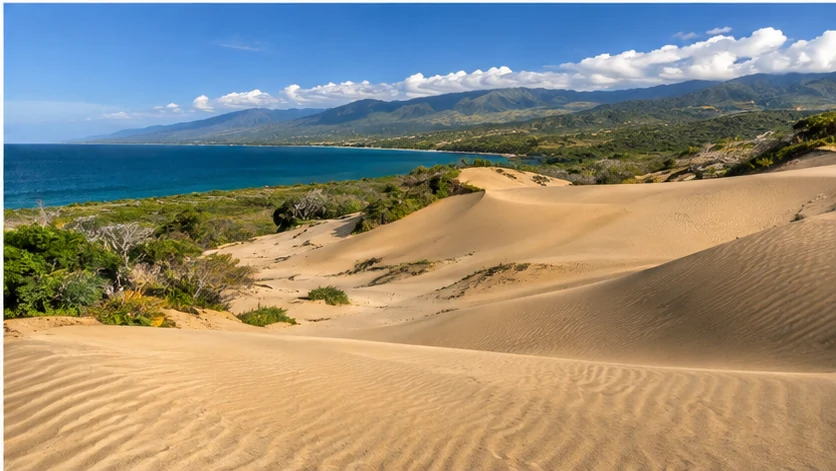
Baní offers one of the Dominican Republic's most surprising landscape contrasts. Within the wider Peravia area, travelers can move from an active provincial city to dry coastal terrain, striking dunes, salt-producing landscapes and beaches along the Caribbean-facing south coast. This is not a resort destination built around a single hotel strip. Its value lies in the combination of nature, local food, history and cultural stops, especially for visitors exploring the country beyond the standard beach circuit.
The most useful planning insight is to distinguish Baní city from the surrounding province. The famous Dunas de Baní lie on the Las Calderas peninsula, outside the urban center. Salt flats, Salinas beach and other coastal attractions are also separate outings. Treat Baní as a base or a day-trip region, not as a compact walking district where every attraction sits around one square.
Is Baní right for your trip?
Baní is a strong choice for independent travelers, photographers, culture lovers and people who enjoy regional food. It fits a south-coast road trip or an excursion from Santo Domingo when conditions and transport permit. Visitors who want all-inclusive resort amenities, effortless beach swimming and extensive nightlife aimed at international tourists may prefer a different base.
The heat and exposure are real considerations. A day at the dunes can involve strong sun, reflected light and very little natural shade. Families should plan shorter outdoor stops, bring more water than they think they need and avoid the hottest part of the day. If someone in your group has limited mobility, research the terrain carefully: loose sand can be exhausting even over short distances.
Getting oriented: city, coast and protected landscape
Baní is the capital of Peravia province, west of Santo Domingo. The city is the natural place to find shops, everyday restaurants and services. South of the city, roads lead toward Las Salinas, the Bay of Las Calderas and the dune landscape. Northward, the terrain changes toward foothills and agricultural areas. A successful itinerary groups nearby attractions rather than crisscrossing the province repeatedly.
A property advertised as “Baní” might be in the city, near the coast or in a rural setting. Check its exact location, road access and distance from dinner options. This matters even more if you are not driving. Public transport may reach towns, but the last stretch to a particular natural site can be inconvenient without a driver.
The Dunas de Baní: the essential experience
The dunes' formal protected-area name is Monumento Natural Dunas de las Calderas. Dominican government and public-sector sources locate them on the Las Calderas peninsula in Peravia. Their sand formations, dry vegetation and nearby salt landscapes are unlike the tropical postcard image many visitors associate with the country. This is the signature attraction for a reason: it reveals a distinctive coastal ecosystem rather than another interchangeable beach.
Go early or later in the afternoon for more manageable temperatures and softer light, subject to the site's actual permitted visiting hours. Wear closed shoes suitable for sand, a hat and sun protection; bring water and keep electronics protected from fine sand. Do not assume that any visible track is a permitted walking route. Follow ranger guidance and stay out of restricted or environmentally sensitive areas.
The site is a protected natural monument, not a recreational sandbox. Avoid driving vehicles onto dunes, removing sand or plants, leaving litter or creating shortcuts across vegetation. Before departure, check current access arrangements with the Ministry of Environment or local authorities. Old online descriptions of opening hours, entry fees or access routes should not be treated as authoritative.
Las Salinas and the salt landscape
The coastal salt-producing area adds a different layer to the trip. Salt extraction is an economic activity as well as a visually striking landscape; bright salt surfaces and shallow water can produce dramatic photographs. Respect industrial work areas, signs and private or controlled access. Do not walk onto production surfaces or approach machinery simply to get a better picture.
The broader Las Calderas area also connects the dunes with coastal settlements and the bay. It is worth allowing time to understand the setting rather than treating the salt flats as a roadside photo backdrop. Ask permission before photographing workers, and consider a locally arranged visit if you want more than a distant view.
Beaches: Salinas, Los Almendros and other coastal stops
The Baní municipal tourism office identifies Playa Salinas and Playa Los Almendros among the area's coastal attractions. Their character differs from the protected dunes, and conditions vary. Salinas can be incorporated into a dunes-focused outing when access and weather allow. Los Almendros has been a local recreational beach, but visitors should check the status of public works and facilities before making it the centerpiece of a trip.
In July 2026, the Dominican presidency announced the start of remodeling work at Los Almendros beach and the Baní seafront. That makes construction status and current access especially important to verify. Do not promise visitors completed facilities, uninterrupted beach access or a finished promenade until official updates confirm them.
The south coast may appear calmer than exposed Atlantic beaches in some conditions, but that is not a blanket safety guarantee. Ask about currents, depth, marine traffic and local advice before swimming. Where lifeguards are absent, err on the side of caution. Bring your own essentials if you are visiting a less-developed stretch of shore.
Culture in the city: Centro Cultural Perelló
The Centro Cultural Perelló is a meaningful stop for travelers who want more than landscapes. It presents cultural programming and exhibitions and is a useful way to add context to a Baní visit. Its own visitor-information page provides practical access details and indicates that admission to permanent and temporary exhibitions is free, although visitors should check for schedule changes, special events and any updated policies before arrival.
A museum or cultural-center stop works particularly well in the hottest part of the day, when outdoor sightseeing is least comfortable. Allow time to engage with the exhibitions rather than treating the venue as a quick photograph. If you are traveling with children, check current family programming. If accessibility is a concern, contact the venue directly for the latest arrangements.
Baní's municipal government also highlights local historical sites connected with Máximo Gómez, the Dominican-born military leader associated with Cuba's independence struggle. Rather than relying on an unsourced walking tour, verify which monuments or museums are currently open and whether interpretation is available. History is most rewarding when you can distinguish a memorial site from the original building or location it commemorates.
Food: a reason to linger
Baní is associated with Dominican regional cooking and traditional sweets. Build a meal around what the kitchen prepares well rather than searching only for international tourist menus. A hearty midday plate, fresh local ingredients and a stop for sweets can make a stronger impression than an expensive dinner chosen for its decor. Ask local residents which bakeries or sweet shops they currently recommend; businesses and quality change over time.
Try a Dominican lunch with rice, beans, stewed meat or fish, and plantains. In coastal communities, seafood may be a good option when handled and prepared properly. Ask whether the fish is priced by portion or weight and whether sides, tax and service are included. If you have allergies, explain them explicitly and confirm ingredients and preparation methods.
For a cultural food experience, visit a well-regarded dulcería and sample a small assortment rather than buying a large box without knowing what you like. Dominican sweets can be rich and intensely sweet; coconut, milk and fruit-based preparations are worth exploring. Carry small-denomination pesos for simple purchases, and keep perishable items cool during a hot driving day.
Where to stay in Baní
For a one-night cultural or road-trip stop, a centrally located hotel with secure parking and reliable air conditioning may be the practical choice. A coastal guesthouse can offer a quieter atmosphere, but may require a vehicle for dinner and supplies. Inspect recent reviews for cleanliness, noise, water pressure and check-in reliability, not just star ratings.
A common booking mistake is selecting a hotel because it appears close to “the dunes” on a broad regional map. The actual drive, final access road and any restrictions matter more than straight-line distance. If your trip is primarily a beach vacation, consider whether Baní should be a day trip rather than your main accommodation base.
Getting there and moving around
Road access from Santo Domingo makes Baní a possible day-trip region, but travel time is variable and should not be presented as a guaranteed number. Congestion, roadworks and weekend traffic can change the plan substantially. A rental car or arranged driver is the easiest way to combine the city, cultural center, dunes and coast. Confirm whether your driver is willing to wait at each stop and whether the quoted fare includes fuel, parking and return travel.
If using public transport, verify current routes and terminals locally. Reaching Baní city is not the same as reaching the dunes. The final stretch may require separate transport, and return options can be limited. Download offline maps, keep your phone charged and avoid unfamiliar rural roads after dark.
A one-day itinerary that actually works
Morning: Leave early enough to reach the Las Calderas area before the strongest heat. Visit the dunes only through permitted access points, keeping your walk within your group's abilities. Spend time observing the terrain and vegetation rather than racing to a viewpoint.
Late morning: Continue toward a legal, publicly accessible viewpoint of the salt landscape. Do not enter active industrial areas without authorization. If conditions allow, stop briefly near the coast for photographs or a rest.
Lunch: Return toward Baní for a proper meal and a break from the sun. Refill water, check traffic and adjust the afternoon to the group's energy level.
Afternoon: Visit Centro Cultural Perelló if it is open, or explore a verified city cultural site. Finish with a traditional sweet shop before returning to your base. This plan intentionally avoids trying to squeeze in every beach, viewpoint and mountain stop in a single day.
A relaxed two-day alternative
On day one, focus on the city: food, culture, local history and a comfortable evening. On day two, make the dunes and coast the main event, with an early start and a generous weather buffer. Splitting the trip reduces heat exposure and makes it easier to respond to closures or road delays. If you are continuing west along the south coast, Baní can also serve as a useful transition stop rather than a detour that forces you back to Santo Domingo.
What to budget for
Budget by category rather than trusting a single published “cost of Baní” figure. Include intercity transport or rental-car costs, fuel, a driver if needed, accommodation, meals, parking, any permitted attraction fees and a contingency. A day trip may cost more than expected if you hire a vehicle for several hours. Conversely, a simple overnight stay can reduce the pressure to complete everything in one expensive day.
Do not assume an attraction is free merely because a blog says it was free years ago. Centro Cultural Perelló currently describes its exhibitions as free on its own site, but other attractions may have different access rules. Check official sources before travel. For any paid guide or excursion, ask about cancellation terms and exactly what is included.
Safety and environmental responsibility
Heat is the most predictable risk. Carry sufficient water, wear sun protection, avoid strenuous walks at midday and watch for signs of heat exhaustion. At the dunes, loose sand and uneven ground make footwear important. Coastal weather can change quickly; never enter water simply because it looks inviting from the road.
Respect the protected landscape. Stay on authorized paths, do not remove natural materials and leave no litter. Use care around salt-production facilities, where surfaces and equipment may be hazardous. If you travel during periods of heavy rain or tropical-weather alerts, reconsider exposed outdoor plans and follow official guidance.
Mistakes worth avoiding
Do not confuse the dunes with a conventional beach attraction. Do not schedule the longest sand walk at midday. Do not assume every museum or cultural site is open daily. Do not rely on outdated photographs to judge the condition of Los Almendros during improvement works. And do not book a remote coastal property without checking how you will reach restaurants and return after dark.
Frequently asked questions
Are the Baní dunes a desert?
They are a protected coastal dune landscape in a dry environment, not an invitation to treat the area as an unrestricted desert playground. Their ecological value is part of the experience.
Can I visit Baní as a day trip from Santo Domingo?
Yes, with an early start and a realistic itinerary. A private vehicle or arranged driver makes the dispersed attractions easier to combine.
Are the dunes suitable for young children?
Possibly for a short, carefully planned visit, but heat, sun exposure and loose sand require extra caution. Follow local access rules and avoid demanding walks.
Is there more to do than visit the dunes?
Yes. Baní has cultural institutions, city history, regional food, salt landscapes and coastal areas. These experiences work best when you give them time.
Can I swim at Playa Salinas or Los Almendros?
Conditions and facilities vary. Confirm local swimming safety, access and any construction-related restrictions before entering the water.
Do I need a guide?
Not necessarily for every stop, but local guidance can improve logistics and interpretation, particularly around protected areas. Use authorized access and check the current rules.
Official and primary references
- Baní Municipal Government — Tourism
- Matanzas Municipal Government — Tourism
- Centro Cultural Perelló — Plan Your Visit
- Dominican Government Film Commission — Dunas de Baní
- Dominican Presidency — Los Almendros Improvement Works, July 2026
Editorial note: Recheck protected-area access rules, beach construction status and cultural-center opening arrangements immediately before publication. No unverified restaurant ranking, admission fee or transport schedule is asserted here.
Official sources
Rules, permits and entry requirements may change. Check official sources before traveling.